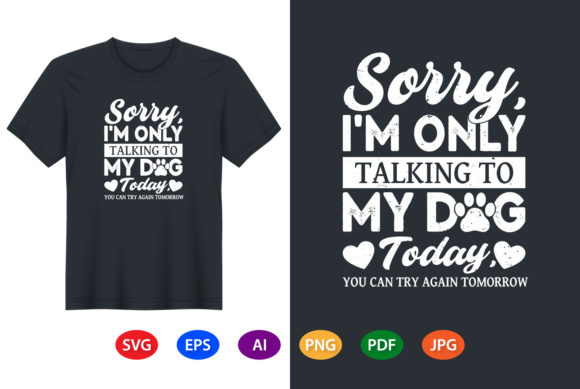
Sorry I m Only Talking to My Dog Graphics for T-Shirt Designs
As a brand designer and content marketer, I’ve reviewed countless graphic design assets over the years. When I first came across Sorry I m Only Talking to My Dog, it immediately stood out as a creative design that could add a touch of humor and personality to any marketing campaign. This is my new Dog T-Shirt Design Hello and Welcome to my T-Shirt Design Store. Here You Can find and Buy T-Shirt Design Digital Files for yourself, friends family, or anyone who supports your Special. It’s not just a T-Shirt Design; it's a visual statement that can be adapted into various digital product formats like SVG design, PNG design, or even as a clipart asset in a design bundle.
First Impressions: Mood, Tone, and Audience Perception
The first thing that catches attention about Sorry I m Only Talking to My Dog is its playful and slightly irreverent tone. The design brings a sense of lightheartedness and relatability, which makes it ideal for casual branding, lifestyle content, or event promotions. It’s perfect for small business branding that wants to connect with an audience that values humor and authenticity.
This graphic design asset doesn’t feel premium or overly formal, which means it’s more suited for handmade products, casual merchandise, or social media campaigns targeting pet lovers, young professionals, or people who appreciate a good laugh. It’s unlikely to work well in formal corporate branding or high-end editorial design, but it shines in contexts where the goal is to create emotional connections through visual storytelling.
Marketing and Branding Applications
Sorry I m Only Talking to My Dog has a wide range of applications in marketing visuals. For example, it can be used as a hero graphic in a product launch campaign, a branded template in a Canva template set, or even as a decorative element on packaging accents. Its versatility makes it suitable for social media graphics, Instagram posts, Pinterest pins, and even Facebook ads aimed at a younger, more casual demographic.
In terms of brand identity, this graphic design asset can serve as a unique visual element that reinforces a brand’s voice—especially if the brand is focused on lifestyle, pet-related products, or creative content marketing. It can also be paired with different font styles, such as serif fonts for a classic look or display fonts for a more modern feel.
Supporting Marketing Goals
One of the key benefits of using Sorry I m Only Talking to My Dog is how it contributes to stronger first impressions. Its bold and clear visual hierarchy ensures that the message is instantly recognizable, which helps in creating memorable campaign visuals. It also adds a layer of consistency to branding efforts, especially when used across multiple platforms like website headers, email banners, or lead magnets.
This graphic design asset supports better product presentation by making promotional materials stand out without looking messy or unprofessional. It enhances audience trust by providing a visually appealing and cohesive brand experience. Additionally, it helps in building emotional connections with the target audience, which is crucial for engagement and brand loyalty.
Where This Design Works Best
Sorry I m Only Talking to My Dog performs exceptionally well in several areas of marketing and branding. It works best as a campaign header for product launches, a hero graphic in editorial design, or as part of a content bundle for creative marketplaces. It can also be used as a social media cover, a promotional banner, or a decorative brand element in web design projects.
Its whimsical nature makes it particularly effective in lifestyle content, event flyers, and posters that aim to create a fun and engaging atmosphere. It’s also a great fit for merchandising, such as stickers, merchandise, or even packaging inserts that want to reflect a playful brand image.
Where to Use with Caution
While Sorry I m Only Talking to My Dog is versatile, there are certain scenarios where it may not be the best choice. It should be used carefully in formal corporate branding, dense information layouts, or designs where the main message needs to be the focal point. It might also not be suitable for small mobile graphics or low-contrast backgrounds, where its visual impact could be lost.
Additionally, it should be avoided in text-heavy ads or designs where the asset competes with the main message. In these cases, it’s better to use simpler, more minimalistic design elements that don’t distract from the core content.
Practical Brand Designer Notes
Before integrating Sorry I m Only Talking to My Dog into a real campaign, it’s essential to test it with the brand color palette to ensure visual harmony. Check how it looks in black and white to confirm its readability and impact. Place it inside real campaign mockups to see how it interacts with other design elements.
Preview it on mobile screens to ensure it maintains its clarity and appeal on smaller devices. Test readability in small sizes, especially if it will be used in social media posts or digital ads. Compare it against competitor visuals to ensure it stands out in the right way. Also, check how it pairs with different font styles, including serif, sans serif, script, handwritten, and display fonts.
Review spacing and balance to ensure the design doesn’t feel cluttered. Finally, confirm commercial licensing before using it in paid campaigns, client work, or business branding. A commercial license ensures that the design asset is legally usable for professional purposes.
Final Thoughts on Sorry I m Only Talking to My Dog
Sorry I m Only Talking to My Dog is a creative design that can bring a fresh and humorous touch to various marketing and branding efforts. Whether you're launching a new product, refreshing your social media visuals, or building a content kit, this graphic design asset offers a lot of value. It’s a strong addition to any designer’s toolkit, especially for those working in content marketing, visual hierarchy, or small business branding.
With the right application, it can enhance campaign visuals, improve engagement, and help build a stronger connection with the target audience. As always, it’s important to test and refine its use within your specific brand context to ensure it aligns with your overall marketing goals and visual identity.